

How to Integrate Asset Management with SAP and Other ERP Systems in Food and Beverage Plants
In the competitive food and beverage sector, efficiency is non-negotiable. Production plants depend on complex production machinery that must operate under strict hygiene and availability standards. To achieve this, asset management must go beyond the walls of the maintenance workshop and connect with the organization’s financial strategy. At the heart of this synergy is systems integration between the ERP and specialized maintenance solutions.
The role of the ERP system in the industrial asset management strategy
For many companies, the ERP system is the brain of business management, consolidating financial management, human resources, and the supply chain. Within the SAP ecosystem, there are several solutions suited to different organization sizes. For example, SAP Business One is a common option for growing companies seeking robustness without the complexity of Enterprise versions.
However, for a food plant to be truly efficient, SAP financial modules must speak the same language as maintenance technicians. This is where systems integration becomes critical. It is not just about moving data, but about creating an ecosystem where industrial asset management directly affects the balance sheet.
Data structure: The master record
The first step toward successful integration is the unification of master data. Without consistency in asset records, communication between departments breaks down. In SAP, the fixed asset master record is the accounting reference, while in the plant maintenance module, the equipment master record is the technical reference.
For fixed asset integration to work properly, each piece of equipment must have a clear correspondence:
- Fixed asset number: The accounting identifier linked to the chart of accounts.
- Asset class: Defines the nature of the asset (machinery, vehicles, buildings).
- Equipment type: Defines the technical characteristics within SAP.
When a new piece of equipment created in industrial asset management software is correctly linked to its financial asset master, the plant gains visibility into the asset’s entire lifecycle, from acquisition through final disposal.
Lifecycle optimization and industrial asset maintenance
Modern asset management in the food industry seeks to maximize the lifecycle of equipment in order to reduce TCO (Total Cost of Ownership). This is achieved through advanced maintenance management that combines preventive maintenance schedules with predictive maintenance strategies.
By integrating asset management with SAP and with artificial intelligence tools together with plant sensors, it is possible to perform a real-time Failure Mode and Effects Analysis (FMEA). This systems integration allows an alert for excessive vibration in a critical asset such as a pump, compressor, etc. to automatically generate a maintenance work order, while simultaneously triggering procurement and inventory management to ensure that spare parts are available without overloading the asset inventory.
Financial and investment management
Asset Accounting should not be limited to recording monthly depreciation. Leading companies use the SAP Investment Management module to plan investment projects and manage modernization business initiatives.
When a plant decides to acquire a new bottling line, asset acquisition workflows are activated. During the construction phase, the concept of a virtual asset (or asset under construction) is used. This virtual asset makes it possible to accumulate installation and labor costs before generating the final capitalization document.
Once the equipment enters operation, tools such as the Asset History Sheet and Depreciation Forecast allow financial directors to perform accurate depreciation calculations and adjust annual budgets. This is essential for complying with International Financial Reporting Standards (IFRS).
Overcoming technical integration challenges
Systems integration often faces the challenge of connecting different data structures. SAP uses ABAP as its proprietary programming language, which requires the SAP team to work together with integrators who are experts in industrial EAM asset management software, such as Power Solution, to define information exchange flows.
To ensure smooth communication, the use of an integration platform that supports various communication protocols (such as REST, SOAP, or industrial protocols) is recommended. These platforms securely manage the exchange flows, maintaining detailed audit logs that are essential for governance, risk, and compliance.
The impact of mobility and artificial intelligence
In the day-to-day operation of a food plant, mobile devices have transformed asset management. A technician can view an asset by scanning a QR code, report a failure, and consult the asset master from the palm of their hand. This practical response reduces downtime and avoids the risk of a costly plant shutdown caused by unexpected failures.
In addition, the use of artificial intelligence makes it possible to predict the remaining lifecycle of fixed assets, making it easier to decide whether to repair or replace a piece of equipment. This proactive risk management is what separates efficient companies from those that simply survive.
Summary of the Integration Strategy
To implement effective asset management in a food plant, follow these steps:
- Unify the asset master: Ensure that each SAP equipment record has a clear accounting link to maintain consistency in asset records.
- Automate SAP processes: Use asset acquisition workflows and automate the capitalization document.
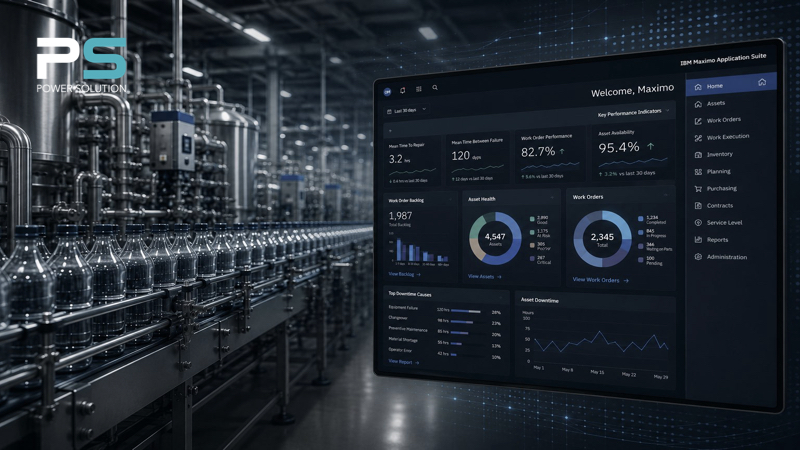
- Implement a CMMS/EAM system: If SAP PM is too complex for plant personnel, consider a specialized EAM system such as IBM Maximo connected through an integration platform.
- Control the lifecycle: Use the Asset History Sheet to analyze performance and improve budget control.
- Strengthen risk management: Apply predictive maintenance and ensure compliance with Governance, Risk, and Compliance.
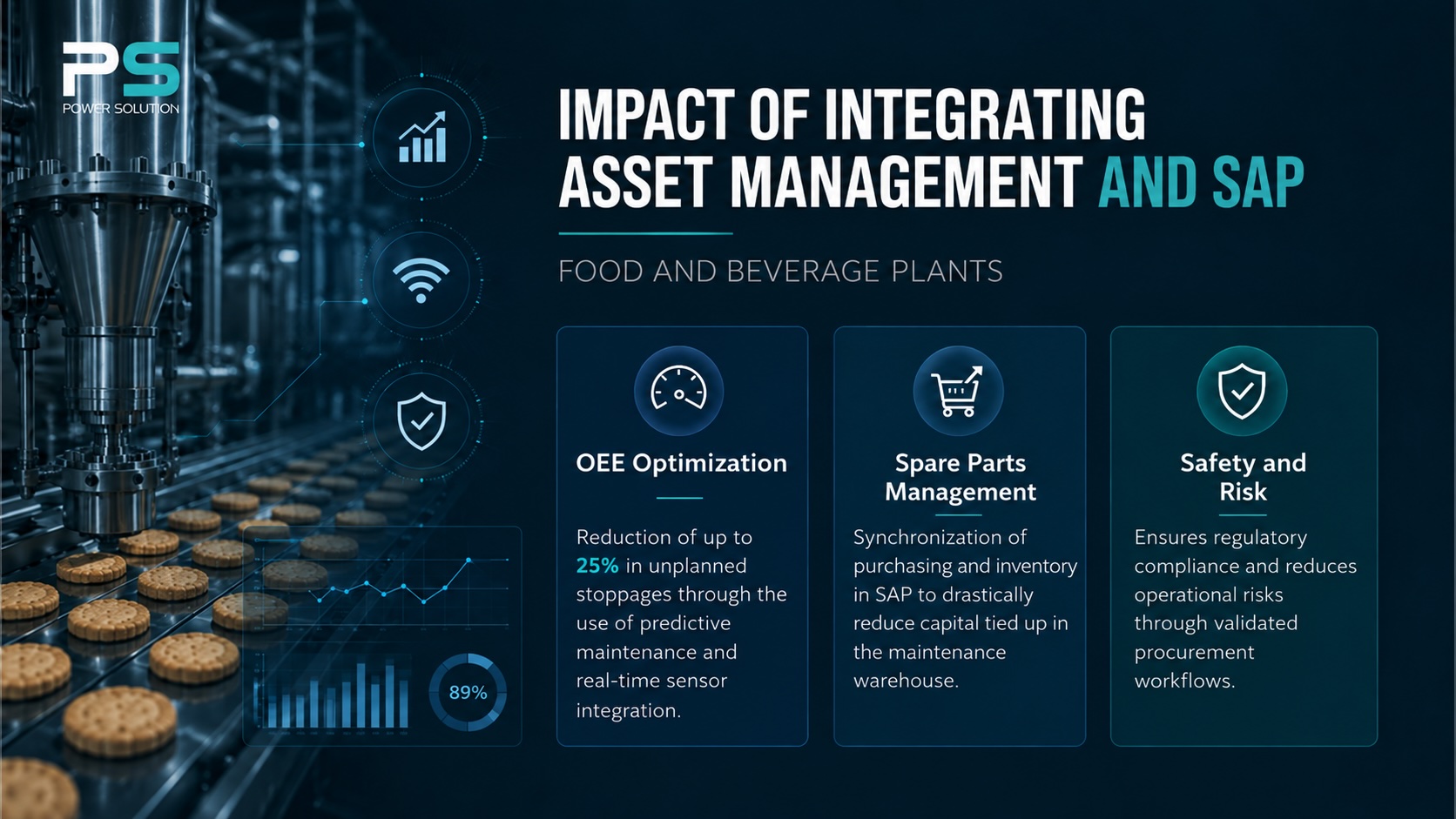
Integrating asset management with SAP is not just a technical project, but one of the most profitable business initiatives for the food and beverage industry. By connecting fixed assets with operational reality, companies achieve stronger asset development that supports long-term sustainability.
Whether you use SAP Business One or the full S/4HANA suite, the objective is the same: complete visibility into the lifecycle, improved materials management, and risk management that protects plant productivity. The future of maintenance is digital, integrated, and strategic. Contact a specialist now.